Quick Answer: Radon is an invisible, odorless gas that seeps up from the soil and can collect inside a home. It's the second leading cause of lung cancer in the United States, and the only way to know a home's level is to measure it. Hampton Roads sits in a lower-risk zone than the mountains out west, but lower risk is not no risk. If you're buying, plan for a radon test by a qualified radon professional alongside your home inspection.
People ask me about radon less than mold or sewer lines, which makes sense. You can't see it or smell it, and a lot of people assume coastal Virginia doesn't have a radon problem. The honest answer is more nuanced than that.
What radon is and why it matters
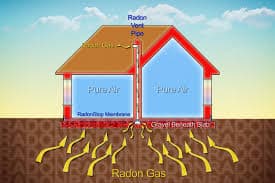
Radon comes from the natural breakdown of uranium in soil and rock. It moves up through the ground and enters a home through cracks in the foundation, gaps around pipes, and openings in the crawl space or slab. Outdoors it disperses harmlessly. Indoors it can build up.
The health concern is real. Long-term exposure to elevated radon raises the risk of lung cancer, and it's the leading cause among people who never smoked. The EPA's action level is 4.0 picocuries per liter, often written as pCi/L. At or above that number, they recommend you do something about it.
Risk levels in Hampton Roads
The EPA sorts counties into zones. Much of southeastern Virginia, including the Virginia Beach and Norfolk area, falls into the lower-risk zones. Parts of inland and western Virginia run higher. So as a region, we're on the lower end.
Here's the catch, and it's the part that matters for your house. Zone maps describe averages across a whole county. Your individual home is not an average. Soil conditions, foundation type, how tight the house is, and how it's ventilated all change the number. A lower-risk zone still has individual homes that read high. The map is a starting point, not an answer for your address.
Signs a home deserves a closer look
Radon gives no warning signs of its own, so you can't spot it on a walkthrough. What you can spot are the conditions that make it easier for soil gas to get in:
- Open cracks in the slab or foundation walls
- Unsealed gaps where pipes and wiring pass through the floor
- A crawl space with exposed soil and little ventilation
- A finished lower level or basement where people spend a lot of time
- A tightly sealed, energy-efficient house with limited fresh air
None of these means a home has a radon problem. They're simply reasons not to skip the test.
What a home inspection covers
A home inspection from InspectRx looks at the structural components, foundation, plumbing, electrical, HVAC and roofing. That means we'll note foundation cracks, open penetrations and crawl space conditions in your report, the same pathways radon uses to get inside.
What a home inspection doesn't do is measure radon. That takes a dedicated test device left in place under controlled conditions, and it's a job for a radon testing professional.
How radon is measured
There are two main approaches, and a radon professional can tell you which fits your situation.
A short-term test runs for a few days using a sealed device placed in the lowest livable level of the home. It's the common choice during a real estate transaction because it fits the timeline. For an accurate reading, the house needs to stay under closed-house conditions, meaning windows and exterior doors stay shut except for normal in-and-out.
A long-term test runs for months and gives a better picture of the year-round average, since radon levels swing with weather and season. If you already own the home and aren't on a deadline, long-term tells you more.
What to do if the level is high
Don't panic. Radon is fixable. A radon mitigation system, usually a sealed pipe and a fan that vents the gas from below the foundation to above the roofline, brings most homes well under the action level. Hire a licensed radon mitigation contractor to design and install it, and have the home retested afterward to confirm it worked.
If you're buying and the result comes back elevated, it becomes a negotiating item like anything else found during your due diligence. The seller can install a system, credit you for one, or you handle it after closing knowing what you're taking on.
Frequently asked questions
Does Hampton Roads even have radon?
Yes. The region is lower-risk on the EPA maps, but individual homes here can still read above the action level. The only way to know about a specific home is to measure it.
When should radon be tested?
During a home purchase, after any major foundation or basement work, and every few years as a homeowner. Cold months often read higher because the house is closed up.
Is a high radon reading a deal-breaker?
No. Mitigation systems are effective and widely available. An elevated reading is something to address, not a reason to walk.
Can I test for radon myself?
You can buy a kit, but results depend on following the instructions exactly, including closed-house conditions. During a purchase, a documented test by a radon professional carries more weight.
Related reading
- Mold Testing vs. Mold Inspection: What's the Difference?
- What Home Inspectors Find Most Often in Virginia Beach Homes
- Pre-Purchase Home Inspection Checklist for Virginia Beach Buyers
- Sewer Camera Inspection: Why Every Homebuyer Should Get One
Protect the rest of your purchase
Radon is one piece of the picture. A thorough home inspection covers the structure, foundation and major systems, and InspectRx also offers mold testing, water testing, sewer camera inspections and new construction inspections. Leave radon to a radon professional, and let us take care of the rest.
Buying a home? Call InspectRx at +1-757-717-1747, email Office@inspectrx.org, or get a quote to book your home inspection. We inspect homes throughout Hampton Roads and Northeastern North Carolina.